Milligrams, Multipliers and Marketing: Reading CBD Potency Claims Without the Hype
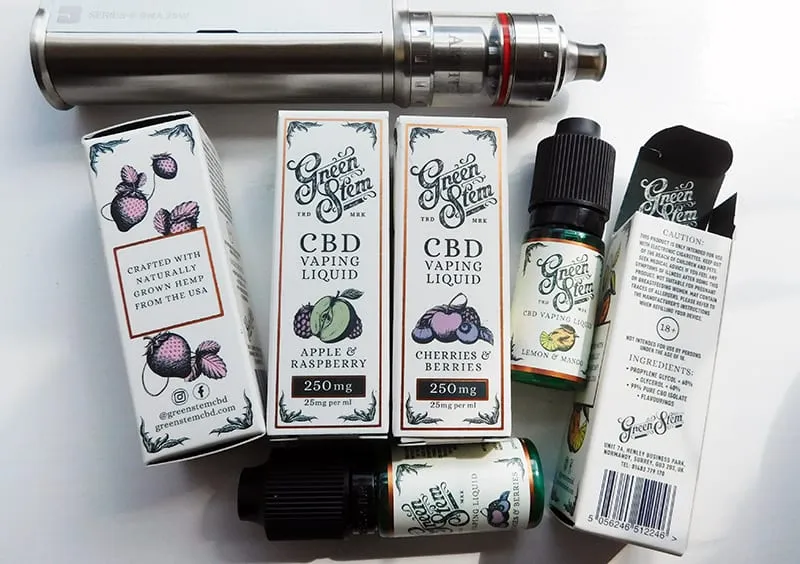
Photo: Ecig Click, CC BY-SA 2.0, via Wikimedia Commons
Potency is one of the most persuasive words on a CBD label. It suggests certainty: a precise number, a clear effect, a product that will do more than the one beside it. In the UK market, however, bold milligram figures and multiplier language such as '10x' often say more about marketing than about measurable strength. For shoppers in 2026, the useful question is not whether a product sounds strong, but whether its claims can be checked against a batch report and a sensible serving size.
The '10x' trap: a multiplier without a benchmark
The phrase '10x' implies comparison, yet it rarely states what is being compared. Ten times the strength of what? A competitor, an earlier formula, a standard serving, or an arbitrary internal baseline? Without a named reference point, the multiplier is not a measurement. It is a rhetorical device. The same applies to 'high-strength', 'maximum potency' and 'ultra-concentrated'. These terms may be lawful as marketing language, but they do not replace a clear declaration of cannabinoid content per serving.
A credible label should tell the shopper three things in plain terms: how much CBD is in the bottle, how much CBD is in a single serving, and how that serving is measured. If a brand leads with a dramatic multiplier but hides the serving size in small print, the claim deserves scrutiny.
Milligrams versus percentage: two different languages
Milligrams and percentages describe different things, and confusing them is common. A milligram figure usually refers to the total cannabinoid content in a container or the amount in a stated serving. A percentage, often expressed as w/v for oils, describes concentration in the liquid. Neither number is automatically more honest than the other. They simply answer different questions.
For example, a 10ml bottle containing 1,000mg of CBD has a concentration of 100mg per ml. If the recommended serving is 0.5ml, that serving contains 50mg. The same 1,000mg figure would mean something different in a 30ml bottle, where the concentration is about 33mg per ml. This is why a large number on the front of a pack can be misleading without the bottle size and serving instructions beside it.
Percentage labels can be equally slippery. A 10% oil is not automatically stronger than a 1,000mg bottle unless the volume and serving size are known. Shoppers should compare like with like: mg per ml, mg per serving, and the number of servings per container.
Serving-size tricks and the arithmetic of value
Serving-size manipulation is one of the quietest ways to inflate a potency claim. A brand may advertise a generous total milligram count while recommending a very small serving. The bottle sounds strong, but each use delivers a modest amount. Alternatively, a product may use a serving size that is difficult to measure, such as a fraction of a dropper, leaving the user to guess.
The practical response is to do the arithmetic before buying. Divide the total CBD content by the number of servings stated on the pack. Check whether the serving size is easy to measure with the supplied dropper or spray. If the label says 200 servings but the bottle contains 10ml, the serving volume is likely to be very small. That is not necessarily a problem, but it should be understood rather than obscured.
Value claims also deserve caution. A higher price does not guarantee higher purity, and a higher milligram count does not guarantee a better routine. Potency is only one part of the picture; purity, testing and consistency matter just as much.
Cross-checking claims against batch reports
A batch report, often called a certificate of analysis, is the most useful independent document a shopper can request. It should relate to the specific batch number on the product, not a generic example from the brand's website. The report should ideally show cannabinoid content, THC level, heavy metals, pesticides, microbial contamination and solvents where relevant. The laboratory should be identifiable, and the methods should be described clearly enough for a non-specialist to see what was tested.
When comparing a bold potency claim with a batch report, look for the measured CBD content and the unit used. A report may state milligrams per gram, milligrams per millilitre or percentage. Convert these into the same unit as the label before drawing conclusions. If the label claims 1,000mg per bottle and the report shows a materially different figure, ask the brand to explain the discrepancy. A trustworthy seller should be able to do so without defensiveness.
It is also worth checking the date of the report and whether it matches the batch in hand. A report from an earlier production run may not reflect the product being sold today. In a market that changes quickly, batch-level transparency is more valuable than a polished potency badge.
A practical label-reading checklist for 2026
Use this checklist when assessing any CBD product in the UK:
- Identify the total CBD content and the bottle or pack size.
- Find the serving size and calculate mg per serving.
- Check whether the label uses milligrams, percentage or both, and convert to a common unit.
- Confirm the number of servings per container.
- Look for a batch number that matches an available certificate of analysis.
- Check the report for cannabinoid content, THC, contaminants and laboratory details.
- Treat multipliers such as '10x' as marketing language until a benchmark is supplied.
- Be sceptical of vague terms such as 'high-strength' without a measurable figure.
- Prefer brands that publish batch reports consistently, not only for selected products.
- Keep expectations realistic: potency claims describe content, not guaranteed effects.
Conclusion
The '10x' trap is not that strength claims are always false. It is that they can distract from the information a shopper actually needs. In the UK CBD market, clarity is a better signal than noise. A product that states its content, serving size and batch testing plainly is easier to trust than one that relies on multipliers and superlatives. Reading labels with a little arithmetic and a demand for batch-level evidence remains the most reliable habit for 2026.