Recovery on the Riverbank: A Practical Framework for CBD After Cold-Water Swimming

Photo: wild swimmer cold water recovery flask towel UK outdoor swimming, via getwallpapers.com
Cold-water swimming in Britain has long been a ritual of contrasts: the shock of the first plunge, the brisk walk back to the car, the flask that tastes better than any drink served indoors. In recent years, another item has appeared beside the towel and changing robe — a bottle of CBD oil. The question for UK swimmers is not whether the habit is fashionable, but whether it is sensible, and how to judge it without turning a recovery routine into an unexamined claim.
CBD is not a medicine and should not be treated as a treatment for injury, inflammation or any other medical condition. It is a cannabinoid sold in oils, capsules, balms and drinks under food and supplement rules, with quality varying considerably between products. For wild swimmers, the useful framework is therefore modest: cold-water exposure first, ordinary recovery second, and CBD — if it is used at all — as a small, optional and carefully assessed addition.
Why cold-water swimmers look to CBD
The appeal is easy to understand. A cold dip can leave the muscles feeling heavy, the skin tingling and the mind unusually quiet. Swimmers often describe a window of calm afterwards, followed by tiredness or stiffness. CBD has become associated with relaxation, sleep and perceived recovery, and those associations fit neatly into the post-swim narrative.
That fit is not the same as proof. Evidence onCBD and exercise recovery in humans remains limited, and much of the enthusiasm rests on small studies, laboratory work and personal report. A swimmer who sleeps well after a dip may be benefiting from the cold water, the exercise, the outdoors, the routine or the simple act of slowing down. CBD may contribute to that picture, but it should not be credited automatically.
A neutral position is more useful than a promotional one. Ask what the product is intended to do, what the label actually supports, and whether the ritual would still feel worthwhile without the bottle. If the answer is no, the routine may be carrying more expectation than it can reasonably bear.
The timing question: before, during or after
There is no robust evidence establishing an ideal time to take CBD around cold-water immersion. Practical routines tend to cluster after the swim, once the body is dry, warm and no longer dealing with the immediate demands of cold exposure. That sequencing is sensible for a simple reason: cold-water safety should come first. A swimmer needs to focus on getting out, drying off, dressing warmly and avoiding a rapid drop in core temperature. CBD is not part of that safety chain.
Some people prefer to take CBD before swimming, often because it is already part of their morning routine. Others wait until they are home and have eaten. Neither approach is inherently superior, but a few cautions apply. Alcohol should not be used to warm up after a cold swim, and CBD should not be combined with sedatives or other medications without professional advice. Anyone who feels dizzy, confused or unusually cold after a dip should seek warmth and appropriate help rather than reaching for a supplement.
A useful rule is to separate the swim from the CBD decision by a fixed interval — perhaps the time it takes to change, pack up and have a warm drink. This creates a pause in which the swimmer can assess how they actually feel, rather than taking a product as an automatic reflex.
Format and dose: practicalities for a British weekend
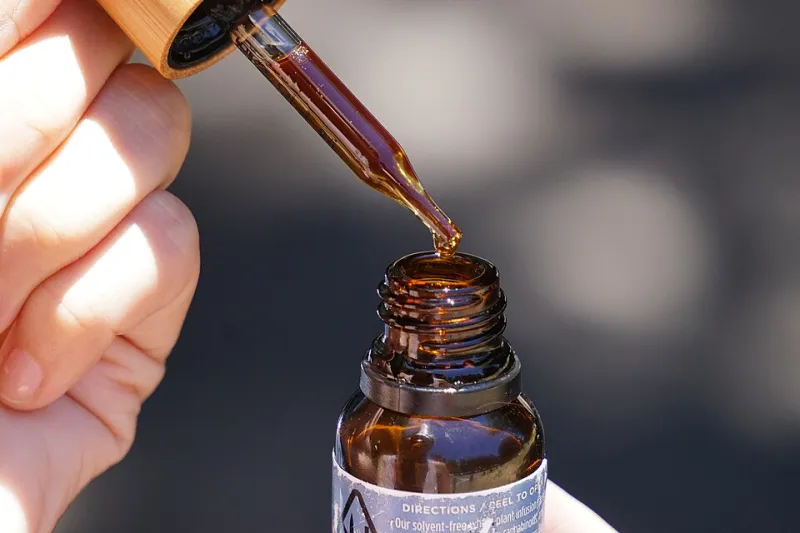
Oil remains the most common format for a post-swim routine because it is portable and easy to measure with a dropper. Capsules suit those who prefer a fixed unit and dislike the taste of oil. Topical balms are popular for massage after drying off, though they should not be confused with ingested CBD and their evidence base is similarly limited. Drinks and shot-style products can be convenient, but they often contain low amounts of CBD and may include sugar or other ingredients that are not part of a recovery plan.
Dose is where marketing often outruns practice. UK labels may express strength as milligrams per bottle or milligrams per drop, and the two are not interchangeable. A 10ml bottle containing 1,000mg is not the same as a 30ml bottle containing 1,000mg. Swimmers should read the label carefully, use the supplied dropper, and start at the lower end of whatever range the manufacturer suggests. Keeping a simple note of date, time, dose and how the body felt is more informative than relying on memory.
Consistency matters more than escalation. There is no reason to increase a dose simply because a swim was colder or longer. If a product does not feel appropriate after a fair trial, stopping is a legitimate outcome.
Evidence versus expectation
CBD interacts with the body’s endocannabinoid system, but that system is complex and still being studied. Claims that CBD “reduces inflammation” or “speeds recovery” after exercise should be read with care, particularly when they appear on a retail website rather than in a peer-reviewed clinical trial. For most healthy adults, the realistic hope is not a dramatic recovery effect but a pleasant, repeatable part of a wind-down routine.
This matters for wild swimmers because cold-water swimming already carries genuine physiological stress. The priority after a dip is rewarming, hydration, food and rest. A CBD product that displaces any of those basics is a poor addition. A product that sits quietly alongside them, with clear labelling and modest expectations, is at least easier to assess.
Safety questions to ask before making it routine
Anyone considering CBD should speak to a pharmacist or GP if they are pregnant or breastfeeding, take prescription medicines, have liver problems, or manage a condition such as epilepsy. CBD can interact with some drugs, and the risk is not eliminated by buying a product described as “natural”.
Product safety is a separate question. UK shoppers should look for a batch-specific certificate of analysis, a clear cannabinoid profile, and a statement of THC content. Products sold as food supplements should sit within UK novel food rules; the absence of basic documentation is a reason to pause. A credible supplier should be able to explain where the hemp was grown, how the extract was tested and what the certificate actually covers.
Finally, cold-water swimming has its own safety rules. Check conditions, never swim alone in an unfamiliar spot, acclimatise gradually, and respect lifeguard advice. A recovery ritual is not a substitute for judgement at the water’s edge.
At 10xPure CBD, the editorial view is straightforward: CBD may have a place in a swimmer’s weekend, but only as a small, documented and optional part of a routine built on warmth, food and rest. The flask comes first. The dropper, if it appears at all, should earn its place.