The Pause Between Doses: Keeping a CBD Break Ledger That Tells the Truth

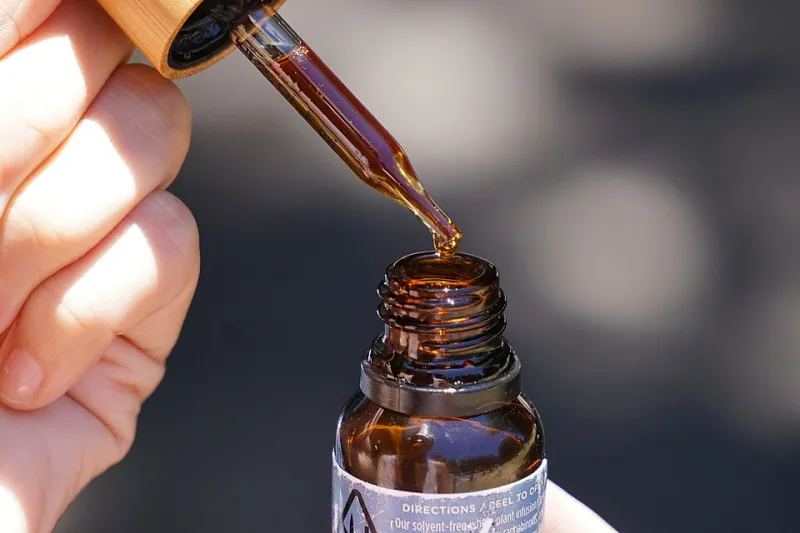
Photo: Pink Sherbet Photography from USA, CC BY 2.0, via Wikimedia Commons
In late 2026, the UK CBD shelf is crowded with advice about when to stop, when to start again and what a break is supposed to prove. The phrase “tolerance break” has travelled from cannabis culture into mainstream wellness copy, but CBD is not THC, and the case for a scheduled pause is less settled than many product pages imply. A break can still be a reasonable personal experiment. It simply needs boundaries, honest notes and a willingness to accept an unexciting result.
Why a break needs a ledger, not a slogan
Marketing language around CBD breaks tends to promise a reset: clearer receptors, a recalibrated system, a sharper response after a fortnight off. Some of this borrows credibility from cannabis science without carrying the evidence across. For CBD specifically, the research base on tolerance and withdrawal is limited, and individual experiences vary. That does not make a break pointless. It makes it a routine question rather than a medical certainty.
A ledger shifts the conversation from belief to observation. Instead of asking whether a break “worked” in the abstract, the user records what changed, what stayed the same and what else was happening in their life. At 10xPure CBD, our editorial interest is in purity, potency and daily routines. A break belongs in that third category: a scheduled change to a habit, judged with the same care as any other adjustment.
First, set the boundaries
CBD products sold in the UK are generally treated as food supplements or novel foods, not licensed medicines. They are not a substitute for prescribed treatment. Anyone taking medication, managing a health condition, pregnant or breastfeeding should speak to a pharmacist or GP before changing a CBD routine, and no one should stop prescribed medicine in order to run a CBD break.
A useful break also needs a stated purpose. Is the aim to review cost, to test whether the routine still feels necessary, to separate the product from the ritual, or simply to take a planned pause before the new year? Write that purpose down before the first day. Decide the start and end dates in advance. Avoid framing the break as a detox or a challenge. It is an audit, not a cleanse.
The baseline fortnight
Before pausing, record a baseline of ten to fourteen days. The point is not to produce laboratory-grade data. It is to create a fair comparison. Keep the product, dose and timing as stable as possible during this phase, and note anything that might otherwise be forgotten: a heavy work week, a cold, a change in exercise, a run of poor sleep.
A simple notebook page is enough. Record the date, product name and batch, CBD content per dose, carrier oil if relevant, time of day, method of use, sleep quality on a simple one-to-five scale, stress on the same scale, and a short note on anything noticeable. Add a column for spend if cost is part of the question. Honesty matters more than neatness. A missed dose should be recorded, not tidied away.
The pause itself
There is no universal recommended length for a CBD break. Informal periods of one to two weeks are often discussed, but that is a convention rather than a clinical standard. If CBD is being used around a specific health concern, the length and terms of any pause should be discussed with a pharmacist or clinician. For a general routine audit, the important thing is that the period is fixed in advance and not extended simply because a retailer is running a “reset” promotion.
During the pause, keep the same ledger fields but set the dose to zero. Add a note on urge to use, substitute habits, sleep, stress and money saved. Keep other routines steady where possible: the morning kettle, the evening walk, the usual bedtime. If you feel unwell, seek appropriate advice rather than pushing through for the sake of the experiment.
Reading the return
After the pause, return to the same product and dose where practical, and record another seven to fourteen days. Compare averages rather than single days. Ask whether the baseline period looked different from the return period, whether the break clarified anything about cost or routine, and whether the product was missed for its effects or simply for the habit of taking it. Avoid the temptation to double the dose to “catch up”.
A ledger template that fits a British routine
| Date | Phase | Product and batch | CBD mg | Time | Sleep 1–5 | Stress 1–5 | Notes | Spend |
|---|---|---|---|---|---|---|---|---|
| 01/12 | Baseline | Oil A, batch X | 20 | 08:00 | 3 | 3 | Busy commute | £0.80 |
| 15/12 | Pause | None | 0 | — | 3 | 4 | Late meeting | £0.00 |
| 05/01 | Return | Oil A, batch X | 20 | 08:00 | 4 | 3 | Steady week | £0.80 |
A paper notebook kept by the kettle is often more reliable than an app. It is visible, quick and not trying to sell anything.
What the ledger cannot tell you
This is not a clinical trial. A personal ledger cannot separate expectation from effect, seasonal change from product change, or a quiet week from a genuine reset. It can, however, stop a marketing phrase from doing all the explanatory work. Be wary of language about “cleansing receptors”, “detoxing the system” or a “30-day reset challenge” that ends with a discount code. A credible claim should be able to say what it is based on.
A sensible conclusion
A CBD break is not compulsory. If a routine is working, the product is properly tested and the cost is acceptable, there may be no reason to pause. If a break is chosen, keep it bounded, record it plainly and discuss any health questions with a pharmacist. The most useful outcome may be modest: a clearer view of why the routine exists in the first place.